
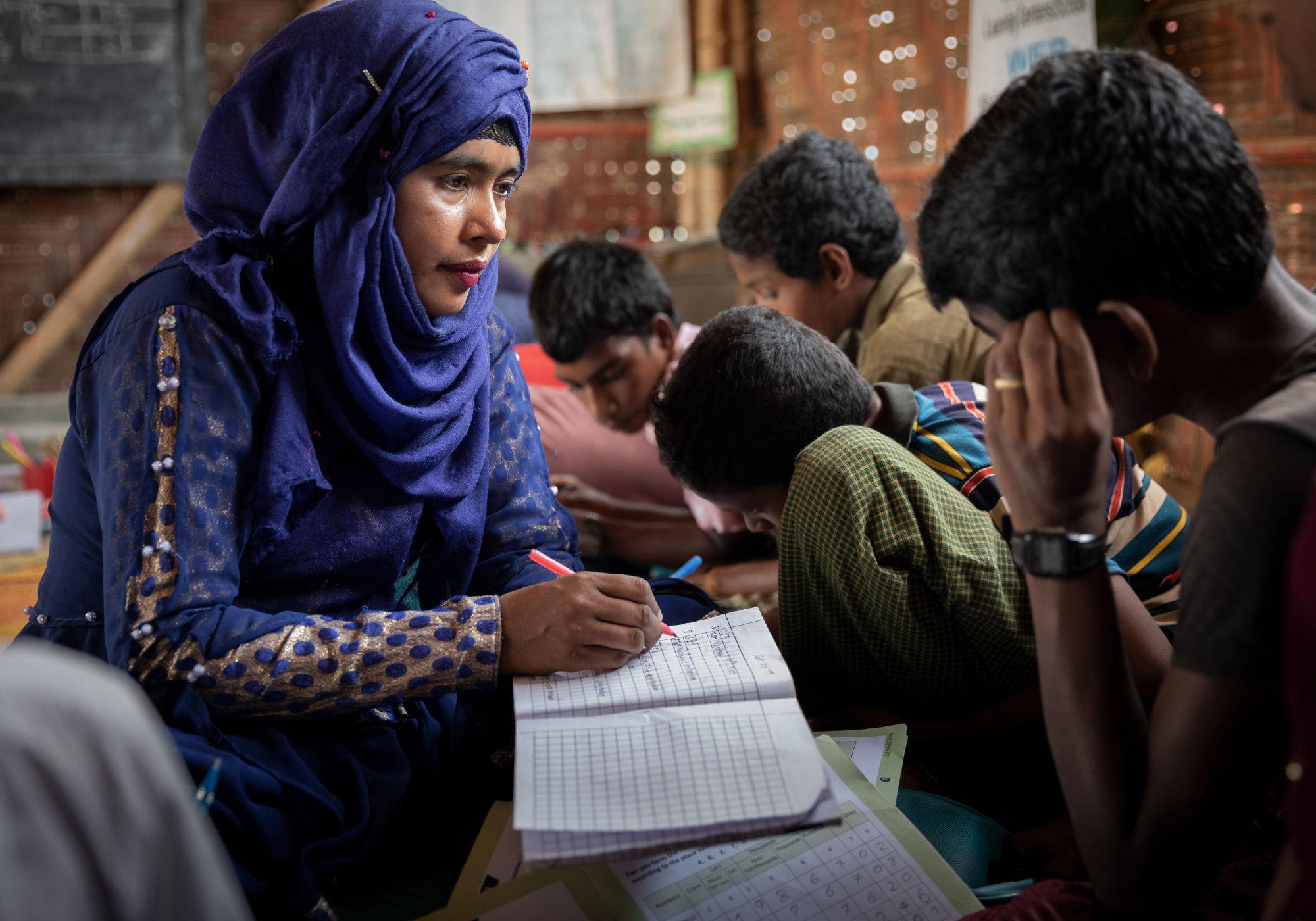

In a world increasingly shaped by conflict, climate disasters, and displacement, millions of children are facing more than just insecurity, they are losing access to education. For many, the classroom represents not just a right, but a lifeline. In the midst of crisis, learning becomes an act of resilience, a refusal to surrender to despair.
Attending school in such conditions means holding onto hope, asserting a child’s right to exist, to grow, and to learn.

A Global Emergency: 224 Million Children Left Behind
According to the United Nations, more than 224 million children worldwide are denied regular access to education due to displacement, violence, or the collapse of infrastructure. In some regions, schools remain closed for years at a time, leaving entire generations without the opportunity to learn.
Despite these staggering challenges, powerful stories of resilience emerge. Children continue their education under tarps, learning via radio, or clinging to any form of education they can find. Their determination sends a powerful message: knowledge is survival, and learning is not optional.
More Than a Right: Education as Identity, Safety, and Survival
In times of crisis, education becomes more than a tool for learning. Schools offer a sanctuary, providing children with a sense of stability and routine amidst chaos. Education helps protect children from the dangers of exploitation in armed conflicts and inhumane practices, while an educated child serves as a vital foundation for the future recovery of their community. Furthermore, it preserves the child’s language and cultural identity, keeping their connection to their roots alive, even in the face of displacement.

Adapting to Collapse: Flexible Solutions for Fragile Contexts
When schools are destroyed or educators are no longer available, humanitarian organizations step in with creative, adaptable models to keep learning alive. Temporary classrooms in tents or mobile units serve as safe, transitional spaces for instruction. Digital learning and radio-based education reach children in isolated or dangerous zones.
In camps and areas of mass displacement, mobile teachers bring education directly to children. Adults from within refugee communities are trained to deliver informal education when formal systems are out of reach. Emergency learning kits, light, portable, and easy to use, ensure that education can begin within days of a crisis.
These strategies reflect one belief: learning must never stop, no matter the circumstances.
“Faael Khair”: A Model of Education Built for Resilience
As part of its commitment to advancing education in crisis-affected regions, King Abdullah bin Abdulaziz International Foundation for Humanitarian Activities launched a groundbreaking initiative under the Faael Khair program. In response to the devastating Cyclone Sidr in Bangladesh, the Foundation constructed multi-purpose schools that double as disaster shelters.
These self-sustaining facilities operate as educational centers during normal days and convert into safe havens during emergencies. This model reflects an integrated approach, one that ensures educational continuity, strengthens community resilience, and positions education as a central pillar of both preparedness and recovery.

Bridging the Gap: Why the Global Response Falls Short
Despite growing recognition of the issue, education receives less than 3% of global humanitarian aid. Many affected areas lack the digital infrastructure needed for remote learning, no internet, no devices, no power. The shortage of qualified teachers is critical, especially in refugee settings where education is often provided by untrained volunteers.
Girls are disproportionately affected. In many conflict zones, they are twice as likely to be excluded from education. The longer a crisis lasts, the less likely they are to return.
Hope Begins with the First Lesson
In the eyes of a child attending class in a makeshift tent, we see the true power of education. It’s not simply about reading and writing, it’s about dignity, protection, and belief in the future. Every lesson taught is a quiet act of defiance against instability and despair. Education must never be the first casualty of crisis.
Ensuring that every child, especially in the world’s most vulnerable environments, has access to safe, quality, and sustained learning is not charity. It is justice. It is our shared responsibility. And it is how we carry forward a legacy of compassion, empowerment, and human dignity, one child, one classroom, one future at a time.